
Negative Afterimage


Reber Shukri

Professor Vaughn


Negative afterimage is a stimulus which elicits a positive image. In order to experience this, one can look at a bright source of light and then look away to a dark area. The way negative afterimage works is when the eye's photo-receptors which are the rods and cones adapt to over stimulation and lose sensitivity. The photo-receptors which are constantly exposed to the same stimulus will fatigue their supply of photo pigment, resulting a decrease in signal to the brain. The way negative afterimage connects to perception is because of bottom up processing where the stimulus influences what we perceive.


https://www.youtube.com/watch?v=szy8iNCljlQ <Link to the video
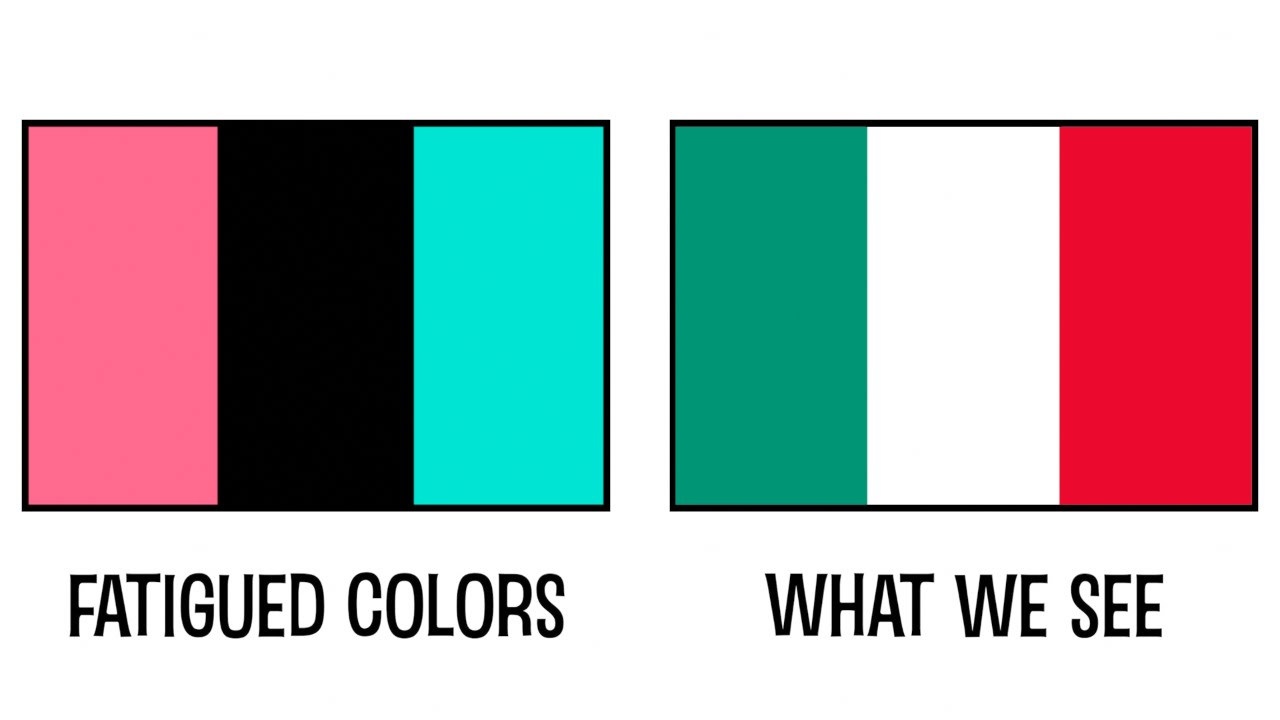


Image result for negative afterimage


Comments

Popular posts from this blog

Body Dysmorphic Disorder

In this video,  Meredith Leston talks about body dysmorphia (anorexia) and the struggles she went through during that time. She talks about how when she looked at herself in the mirror her perception of herself was different of what was actually there. When Meredith looked in the mirror she saw an over weight version of herself that wasn't even there which made her keep starving herself. This shows how when someones perception is off it can affect someone in a real negative way. 

Self Perception Theory

https://study.com/academy/lesson/self-perception-theory-definition-and-examples.html This link relates to how perception can be pointed inward upon ourselves. Addressing this is the Self Perception theory, which plays the idea that people create their attitudes by observing their own behavior and then making an assumption on what attitudes must have caused it. I found this video to relate well to perception, but also to exemplify just how powerful our brains truly can be. An interesting concept, I thought. I hope you do too!

Human Perception and it's Fascinating Facts

The human mind is capable of so many. different things that are turly incredible but most of the these incredbile things we take for granted. This article shows us the simple visual aspects and how our braing forms them within our mind. Throughout the article there are examples for different kinds of laws. These laws include Law of Proximity or Nearness, Law of Similarity, Law of Good Figure or Symmetry, Law of Closure, and Law of Continuity. All of these laws sound complicated and you amy assume that they are complex, however they aren't anywhere near that level. They are rather explnations for the reasoning behind why we perceive what we perceive. https://www.online-therapy.com/blog/human-perception-fascinating-facts/